The objective of his posts is to enhance the User Experience (UX) and User Interface (UI) of the CLOUT Festival companion app. These enhancements will be achieved by analysing data gathered from primary research conducted through a Google survey, as well as extensive secondary research sourced from the web and lecture materials.
We will begin with a brief two-question survey to establish the direction for future development of the user interface (UI) and user experience (UX). This survey will provide us with valuable insights into users needs and preferences enabling us to address the areas that require improvement.
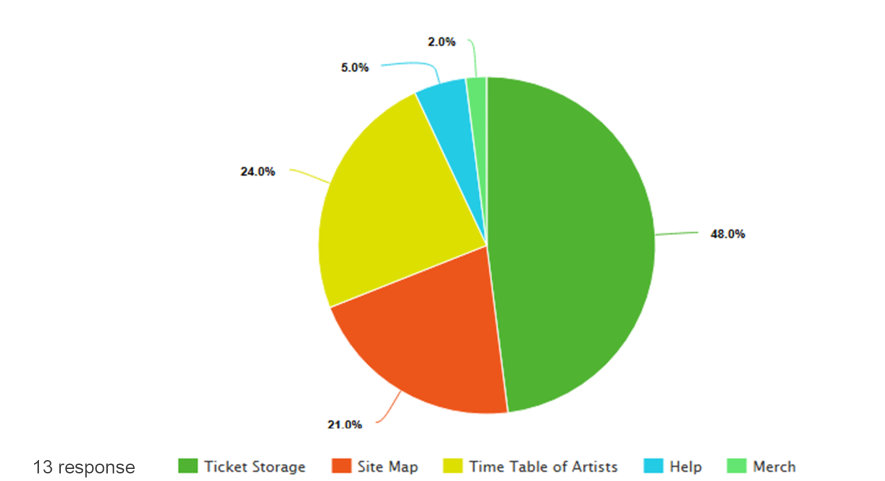
Which feater do you find the most important on an Companion App for a Festival ?
Where would you want your ticket stored ?
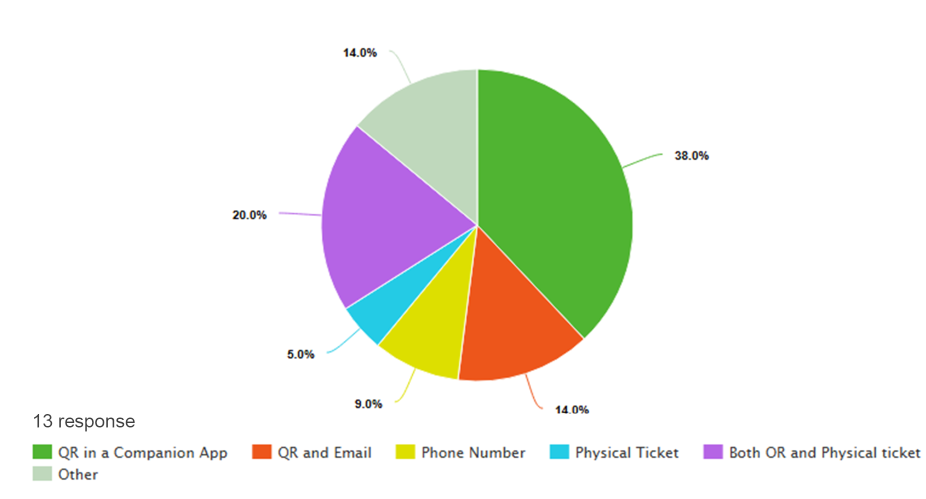
Similar to my previous post the initial step I took was to conduct a brief survey consisting of two questions. This survey serves as a foundation for the development of the companion app enabling me to evaluate that the majority of users utilise such an app for three primary features: ticket access, site maps, and artist timetables. Understanding these preferences allows me to enhance the user experience as I now have a clear insight into what users expect from a festival companion app. Consequently, this leads to a more effective user experience, allowing me to concentrate on these aspects during the user interface development.
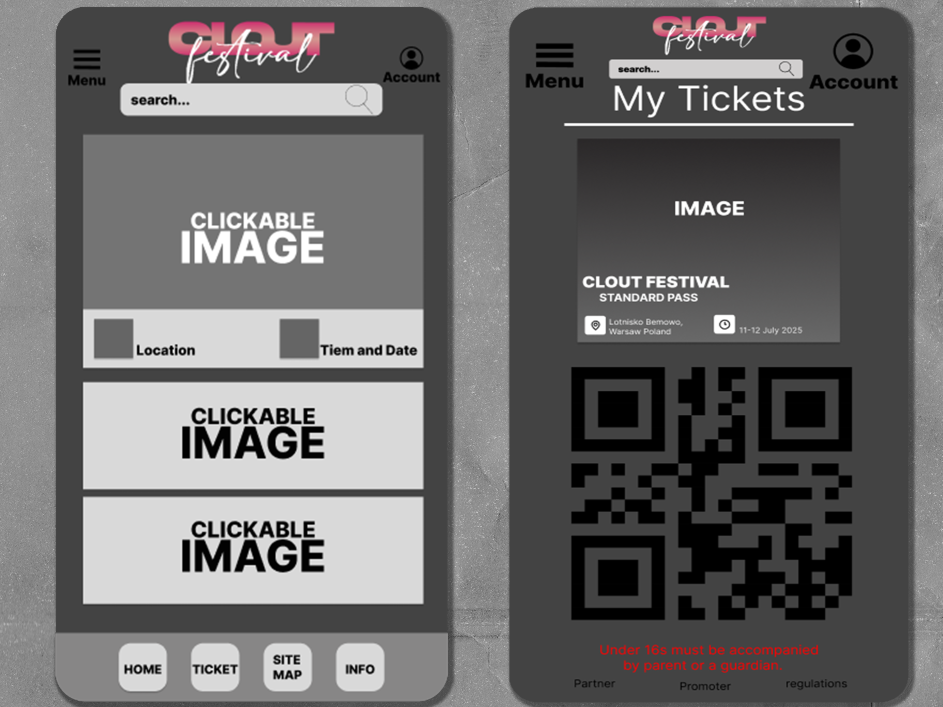
While developing the enhanced low-fidelity prototypes I chose not to completely diverge from the initial prototypes created during the research phase. I believe those prototypes accurately reflected the data I collected. As mentioned in the previous paragraph the three most critical elements tickets, line-up and site map are already incorporated into my low-fidelity prototype. Additionally, I have maintained similar call-to-action buttons at the bottom of the app along with concise information segments that users can click on to navigate to the next page. This approach contributes to an effective user interface by consolidating all necessary information and sections in one place avoiding the clutter of unnecessary details. This companion app is designed to enhance user experience by providing easy access to essential information. Furthermore, I have introduced a significant feature by making the app more personalised through an account system. Based on insights from previous surveys I noted that the age group participating in music festivals is not predominantly young. By implementing an account system I aim to improve user experience as it adds a sense of security and legitimacy that older users may appreciate thereby fostering a stronger relationship between the user and the app.
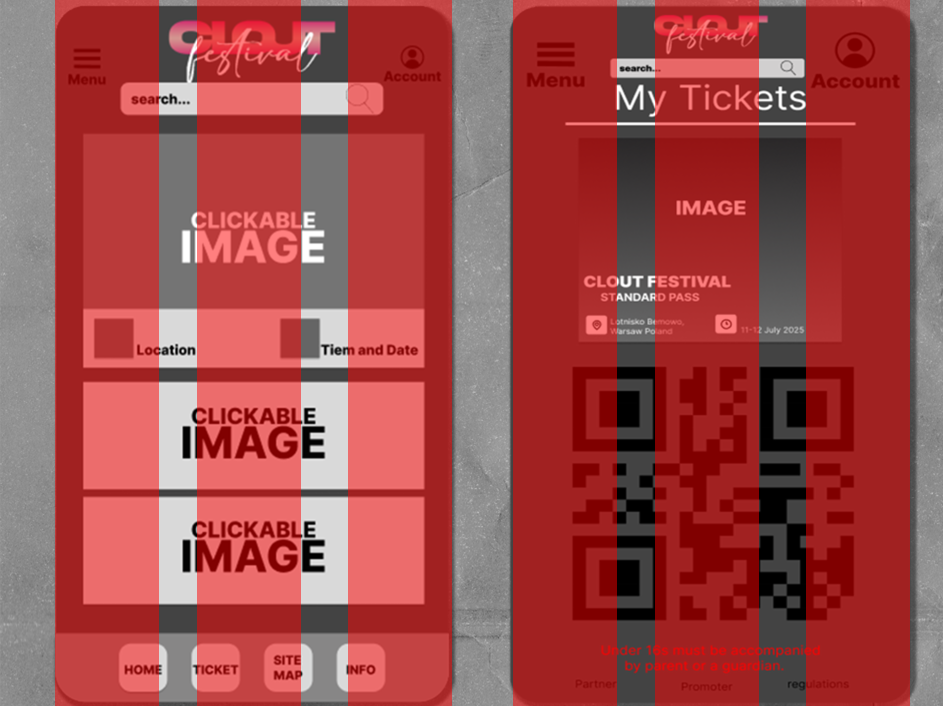
I have begun to incorporate responsive layout into my considerations as I aim for the application to be adaptable for use across multiple screens. A significant advantage of responsive design is its enhancement of user experience. A responsive website provides users with an optimal viewing experience by automatically adjusting to accommodate the screen size and orientation of any device. This adaptability facilitates seamless navigation and interaction with the website, irrespective of the device being utilised (further details will be provided in post 5).
Reference
Seattlenewmedia -10 Reasons Why Responsive Web Design is Important (2025)https://www.seattlenewmedia.com/blog/why-responsive-design-is-important[Accessed 5/4/25]
Attractions – 4 ways an all-in-one companion app improves the guest experience (2022) https://attractions.io/learn/4-ways-an-all-in-one-companion-app-improves-the-guest-experience [Accessed 5/4/25]